Semi trailer axle selection guide choose the right axle to make transportation more efficient and worry free
Among the core components of a semi-trailer, the axle can be regarded as the "cornerstone of load-bearing and walking", which directly affects the safety, stability, fuel economy of transportation, and even affects the overall operating costs. For cardholders and logistics professionals, choosing the right semi-trailer axle is not as easy as simply comparing prices, but requires comprehensive consideration of various factors such as transportation scenarios, load requirements, and road conditions. Many people, due to blind selection, either suffer from early damage and frequent maintenance of the axle, or increase fuel consumption due to excessive weight, which is not worth the loss. Today, we will provide a comprehensive guide for selecting semi-trailer axles to help you avoid misunderstandings and choose the most suitable axle.
1、 Accurate positioning requirement: Scene determines selection direction
The first step in selection is to clarify one's core transportation needs. Different transportation scenarios have vastly different performance requirements for the vehicle axle, and discussing selection without context is like talking on paper.
1. Divided by load requirements: the choice between lightweight and heavy-duty types
Load capacity is the core indicator of vehicle axle selection, which directly determines the bearing capacity and structural strength of the vehicle axle.
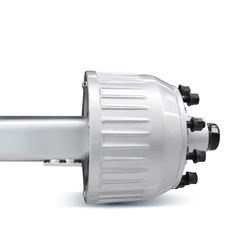
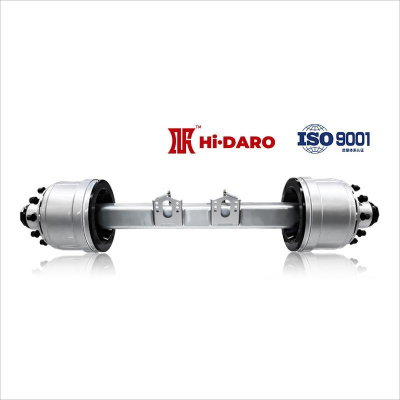
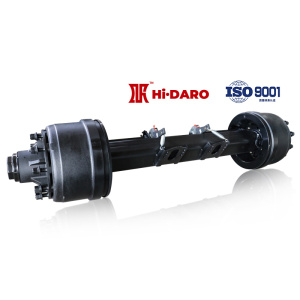
For users engaged in standard load transportation such as express delivery, general cargo, and home appliances, and mainly engaged in long-distance trunk lines, lightweight axles are undoubtedly the best choice. The design core of this type of axle is "weight reduction without quality loss". By optimizing the materials of components such as the wheel hub, brake drum, and axle housing, high-strength alloy materials are used instead of traditional steel. On the premise of ensuring the load-bearing capacity meets the standard, a single axle can achieve a weight reduction of 30-50kg. Don't underestimate the difference of tens of kilograms. For semi trailers that run long distances all year round, it can not only increase the effective cargo capacity, but also reduce fuel consumption. Over the long term, it can save users considerable operating costs. At present, factories such as Darong Axle that focus on the production of semi-trailer axles in the market have a good reputation for their lightweight products in the industry, achieving a perfect balance between weight and strength with mature technology.
For heavy-duty demand scenarios such as sand and gravel, coal, and large transportation, especially for situations with a load capacity of ≥ 50 tons, it is necessary to choose heavy-duty axles. This type of axle is designed with a focus on "high strength and wear resistance". The axle tube is made of thickened alloy seamless steel pipe, and the gears are strengthened to easily cope with high-strength pressure under heavy load conditions. At the same time, the braking system of heavy-duty axles has also been specially optimized, with brake drum thickness far exceeding the national standard. The brake pads are made of high wear-resistant materials, which can effectively avoid thermal degradation caused by frequent braking and ensure transportation safety.
2. Classification by road conditions: adaptation between highway and non highway types
The differences in road conditions determine the transmission structure and ground clearance requirements of the vehicle axle, which is often overlooked by many users.
If the main road conditions are good, such as highways and flat national roads, a single-stage deceleration bridge is the ideal choice. The transmission structure of this type of axle is simple, with high transmission efficiency, low noise, excellent fuel economy, and relatively low maintenance costs, fully meeting the efficient needs of road transportation.
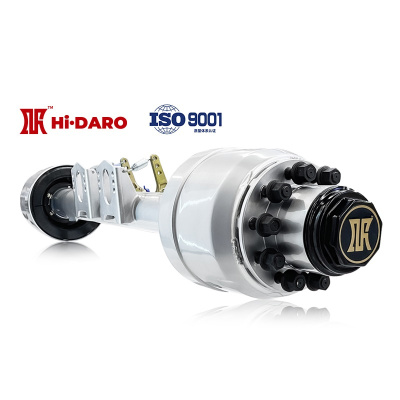
If you frequently drive on complex non road conditions such as mountain roads, construction sites, muddy roads, etc., it is necessary to prioritize the use of wheel speed reducers. The biggest advantage of a wheel reduction axle is its large ground clearance, which can effectively prevent the axle housing from being damaged by bumps or obstacles on bumpy roads or in environments with many obstacles. At the same time, its unique wheel side deceleration structure can provide greater torque, and its climbing and off-road capabilities far exceed those of a single-stage deceleration bridge, allowing it to maintain a stable driving state even in harsh road conditions. However, it should be noted that the wheel side reduction bridge has a relatively heavy weight and slightly lower transmission efficiency than a single-stage reduction bridge, making it more suitable for scenarios with high requirements for passability.
2、 Focus on core quality: These indicators determine the lifespan of the vehicle axle
After clarifying the selection direction, it is necessary to focus on the core quality of the axle. A high-quality axle has strict standards in terms of material, craftsmanship, key components, etc., which is also the key to avoiding frequent maintenance in the later stage.
1. Material and craftsmanship: Building a solid foundation for safety
The material and craftsmanship of the axle directly determine its load-bearing capacity and fatigue resistance. As the core load-bearing component of the axle, alloy seamless steel pipes are preferred for the axle tube. Compared with ordinary steel pipes, it has stronger resistance to bending and fatigue, and is less prone to fracture under long-term heavy load conditions. It is recommended to choose products with integral stamping and submerged arc welding process for the bridge housing. This process can ensure the sealing of the bridge housing, effectively prevent impurities such as rainwater and mud from entering the interior, avoid damage to components such as gears and bearings due to pollution, and extend the service life of the axle.
2. Braking system: Hold the safety bottom line
The braking system is the core guarantee of transportation safety, and special attention should be paid when selecting. In terms of brake drums, the thickness should meet the national standard of ≥ 18mm, and alloy cast iron is preferred as the material. This material has fast heat dissipation and strong wear resistance, which can effectively avoid thermal degradation caused by long-term braking and reduce the risk of brake failure. It is recommended to choose asbestos free ceramic materials for brake pads, which not only have good braking effect, but also have less dust, long service life, and are more environmentally friendly, in line with current environmental policy requirements.
3. Bearings and oil seals: details determine durability
Although bearings and oil seals are small components of the axle, they have a significant impact on the durability of the axle. It is recommended to choose well-known brand tapered roller bearings for bearings, which have strong load-bearing capacity, low rotational resistance, can reduce energy loss during driving, and have a longer service life. For oil seals, it is necessary to choose double lip wear-resistant oil seals, which have better sealing performance and can effectively prevent lubricating oil leakage, avoid bearing damage due to lack of oil and dry wear, and reduce maintenance costs in the later stage.
3、 Pay attention to brand after-sales service: to safeguard long-term operation
The semi-trailer axle is a consumable component that is frequently used, and later maintenance and after-sales support are crucial. Therefore, choosing a reliable brand and a comprehensive after-sales system can save users a lot of trouble.
1. Priority should be given to selecting strong and reputable brands
There are numerous brands of semi-trailer axles on the market, with varying levels of quality. It is recommended to prioritize factory brands such as Darong Axle, which specialize in the production of semi-trailer axles. These brands have a deep technical foundation and a comprehensive quality control system, resulting in more stable and reliable product quality. At the same time, it is also possible to compare top brands in the industry. When purchasing, it is necessary to check the product's certificate of conformity and warranty, carefully inspect the appearance and labeling of the axle, and avoid buying refurbished axles or counterfeit products.
2. Clarify the details of after-sales support
When choosing an axle, it is important to proactively inquire about after-sales related issues to avoid disputes in the future. Firstly, there is the warranty period. The warranty period for conventional standard load axles is generally 1-2 years or 100000 kilometers, while the warranty period for heavy-duty axles can be negotiated with the manufacturer according to the actual situation; Next is the distribution of service outlets, with priority given to brands with a large number of service outlets nationwide. This way, in the event of a vehicle axle malfunction, repair stations can be quickly located, reducing downtime; Finally, regarding the supply of accessories, inquire with the manufacturer if they can provide sufficient original parts to ensure that the accessories can arrive quickly and avoid long-term vehicle shutdowns due to a shortage of accessories.
4、 Calculate cost-effectiveness: Don't just look at the purchase price, but also consider the total cost
Many users have a misconception when choosing a product, thinking that the lower the price, the more cost-effective it is. In fact, the cost-effectiveness of a vehicle axle should not only be based on the initial procurement cost, but also on the total long-term operating cost.
Although some miscellaneous car axles are initially cheap, their materials and craftsmanship are not up to standard. After 3-6 months of use, problems such as axle tube deformation, oil seal leakage, and brake failure may occur. Not only does it require frequent maintenance and incur significant repair costs, but it may also cause huge economic losses due to vehicle shutdowns, which often far exceed the price difference saved in the initial stage. Although the initial procurement cost of high-quality axles is slightly higher, their service life can reach 3-5 years, with extremely low maintenance frequency and better fuel economy. In the long run, they can actually save users more operating costs.
Conclusion
The selection of semi-trailer axles is essentially a comprehensive consideration of transportation needs, product quality, and operating costs. Choose lightweight single-stage speed reducers for standard long-distance transportation, and reinforced wheel side speed reducers for heavy-duty non road transportation. By identifying the craftsmanship, high-quality components, and perfect after-sales service of major manufacturers, you can choose the most suitable axle for yourself. I hope this selection guide can provide practical reference for cardholders and logistics practitioners, helping them avoid selection errors and make transportation more efficient and worry free.