Air suspension: Advantages, Working Principle and Market Trends
In modern logistics transportation, the comfort, safety and fuel efficiency of semi-trailers are receiving increasing attention. As a key technology, the air suspension system is gradually replacing the traditional leaf spring suspension. This article will provide a detailed introduction to the core advantages, working principle, and applicable scenarios of the air suspension system for semi-trailers, and analyze its development trend in the global market, to help fleet managers, logistics companies, and industry practitioners make more informed decisions.
1. Air suspension vs. Leaf Spring Suspension: Core Advantage Comparison
1.1 Better shock absorption performance
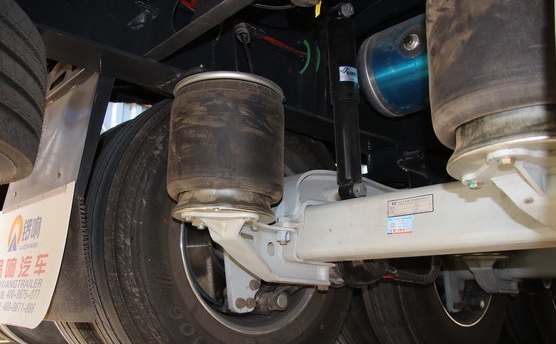
Air suspension buffers vibrations through airbags (air springs), which can significantly reduce road impact compared to leaf springs and protect goods, especially fragile items and precision instruments.
Reduce driver fatigue and enhance the comfort of long-distance driving.
1.2 Adjustable vehicle body height
The airbag air pressure is automatically or manually adjusted through the ECU (Electronic Control Unit) to meet different load requirements.
Lower the vehicle body when loading and unloading goods to facilitate forklift operation. Raise the vehicle body when driving at high speed to improve passability.
1.3 Extend the lifespan of tires and axles
Balanced load distribution reduces abnormal tire wear and lowers the frequency of replacement.
Reduce the impact on the axle and chassis structure to lower maintenance costs.
1.4 Comply with environmental protection regulations in Europe and America
Regulations such as ECE R55 in Europe and DOT in the United States encourage the use of air suspension to reduce road wear and carbon emissions.
Some countries (such as Germany) offer toll discounts for air-suspended trucks.
2. The main components and working principle of the air suspension system
2.1 Workflow
When the load changes: The ECU detects the load through sensors, adjusts the airbag air pressure, and keeps the vehicle body level.
During driving: The height valve dynamically adjusts the suspension stiffness according to road conditions (such as bumps and curves) to enhance stability.
When loading and unloading goods: The driver can manually lower the suspension height to facilitate the handling of the goods.
3. Applicable scenarios: Which semi-trailers are most suitable for air suspension?
Reasons for vehicle type application
Precision instrument transport vehicles have high shockproof requirements to prevent damage to the goods
Cold chain logistics vehicles reduce vibration and protect refrigeration equipment
High-end drop-and-pull transport vehicles enhance driving comfort and reduce tire wear
Cross-border logistics vehicles (for the European market) comply with environmental protection regulations and enjoy policy benefits
4. Global Market Trends and Future Development directions
4.1 The European and American markets lead, and the Asia-Pacific market grows rapidly
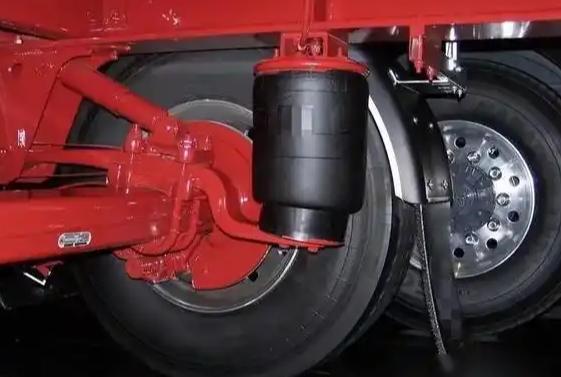
In Europe, more than 60% of newly sold semi-trailers adopt air suspension (with the highest penetration rate in countries such as Germany and the Netherlands).
North America: Long-distance freight fleets are gradually replacing leaf spring suspensions to reduce operating costs.
China & Southeast Asia: With the development of high-speed logistics, the high-end tractor market has driven up the demand for air suspension.
4.2 Trends in Intelligence and Electronic control
AI adaptive adjustment: In the future, air suspensions may combine GPS and big data on road conditions to automatically optimize suspension parameters.
Lightweight design: Utilizing composite materials to reduce weight and enhance fuel economy.
5. Suggestions for purchase and maintenance
5.1 Key Points for Selection
✔ Brand selection: International brands such as WABCO (WABCO), SAF-Holland, and BPW are reliable in quality.
✔ Compatibility check: Ensure that the air suspension is compatible with the axle and chassis (such as for 3-axle or 2-axle semi-trailers).
✔ After-sales service: Choose suppliers that offer global warranties to avoid delays in repairs.
5.2 Maintenance Precautions
Regularly check if the airbag is leaking to avoid long-term overloading.
In winter, pay attention to drainage and anti-freezing to prevent the gas storage tank from freezing.
Check the ECU system every 50,000 kilometers to ensure that the sensors are working properly.
Conclusion
Air suspension systems are becoming the technical benchmark in the semi-trailer industry. They not only enhance driving safety and cargo protection capabilities but also reduce long-term operating costs. With the global logistics moving towards higher efficiency and intelligence, investing in air suspension semi-trailers will become a wise choice for an increasing number of enterprises.