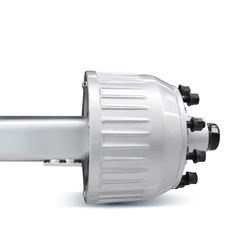
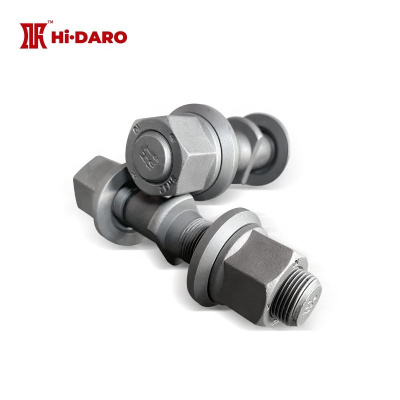
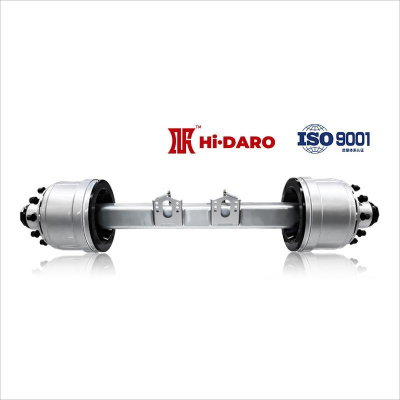
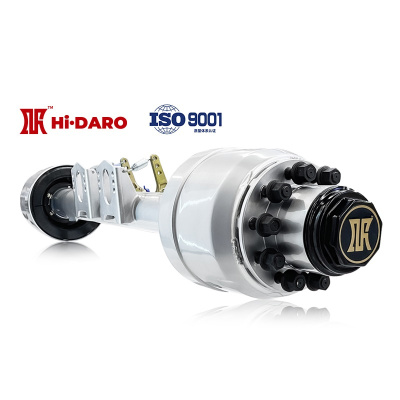
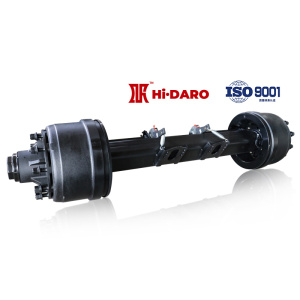
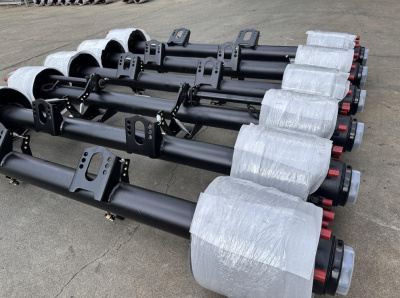
A comprehensive guide helps you choose high-quality semi-trailer axles
In the logistics and transportation industry, the semi-trailer axle, as the core component for carrying and transmitting, directly affects the safety, stability and operating costs of the vehicle. Choosing high-quality axles can not only reduce the frequency of maintenance, but also improve fuel efficiency and extend the service life of the entire vehicle. This article will provide a detailed introduction on how to distinguish the quality of axles and offer professional purchasing suggestions to help you choose the most suitable axle configuration for your fleet.
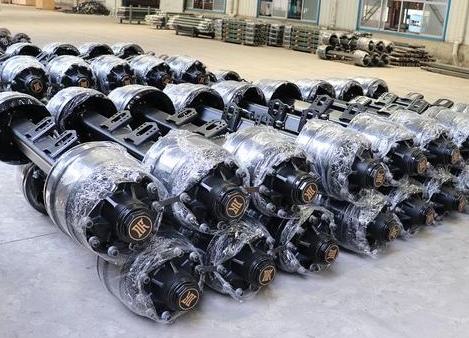
1. Axle types and applicable scenarios
1.1 Classification by load-bearing capacity
Type, load-bearing range (tons), applicable vehicle models
Single-stage reduction bridge 10-13 standard load transportation, general freight transportation
Double-stage reduction bridge 13-16 for heavy-duty transportation and engineering logistics
High-load-bearing Bridges for 16+ large cargo transportation and special vehicles
1.2 Classification by braking mode
Drum brake axle: Low cost, easy to maintain, but poor heat dissipation, suitable for medium and short-distance transportation.
Disc brake axle: It has better braking performance, faster heat dissipation, and is suitable for long-distance high-speed transportation (the mainstream in the European market).
1.3 Classification by suspension matching
Leaf spring suspension axle: Economical and durable, suitable for general freight transportation.
Air suspension axle: Good shock absorption, adjustable height, suitable for high-value-added transportation such as precision instruments and cold chain.
2. How to distinguish the quality of axles? Five key indicators
2.1 Materials and Manufacturing Processes
√ High-quality axle: Made of high-strength alloy steel, it undergoes heat treatment and shot blasting strengthening, featuring strong fatigue resistance.
Poor-quality axles: Made of ordinary steel, they are prone to deformation and breakage, and pose a high risk of long-term use.
Detection method:
Check whether there is ISO 9001 or DOT certification.
Observe whether the welding area is flat and whether there are any sand holes or cracks.
2.2 Bearings and Sealing Performance
√ High-quality axle: Equipped with bearings of brands such as SKF/FAG/NSK, it features excellent sealing performance and is dust-proof and water-proof (IP6K-9K standard).
Poor-quality axles: They use cheap bearings that are prone to sand and mud ingress, leading to premature wear.
Detection method:
Turn the wheel and listen for any abnormal sounds (high-quality bearings should be silent and smooth).
Check whether the oil seal is tight and whether there are any signs of oil leakage.
2.3 Braking Performance
√ High-quality axle:
Drum brake: Widened brake shoes for faster heat dissipation (such as WABCO brakes).
Disc brake: It adopts a ventilated disc + ceramic brake pads, providing a shorter braking distance.
Poor-quality axles: The brake drums are thin, prone to overheating and failure, and have a long braking distance.
Detection method:
After continuous braking tests, touch the temperature of the brake drum (high-quality axles heat up more slowly).
2.4 Weight and Lightweight Design
√ High-quality axles: Reduce weight and fuel consumption through designs such as hollow shafts and aluminum alloy shells (such as the BPW ECO Plus series).
Poor-quality axles: Heavy, increase ineffective load, and have poor fuel economy.
Detection method:
Compare the weight of axles of the same specification (high-quality products are usually lighter).
2.5 Brand and After-sales Service
√ Recommended brands:
Europe: BPW, SAF-Holland, JOST (5-year warranty + global service network).
China: FUWA, DARO (high cost performance, suitable for emerging markets).
Poor-quality axles: No brand logo, no after-sales guarantee.
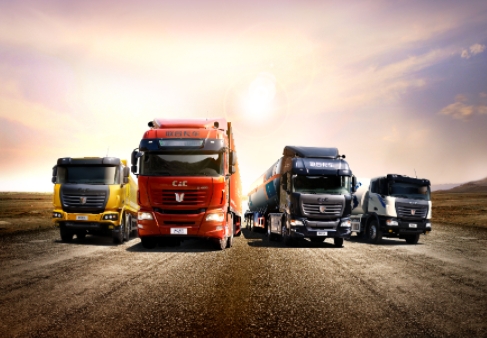
3. Four Key Steps for Selecting Axles
3.1 Clarify transportation requirements
Standard load transportation (<40 tons) : Single-stage reduction axle + drum brake.
Heavy-duty/long-distance high-speed: Two-stage reduction axle + disc brake + air suspension.
3.2 Compare Price with TCO (Total Cost of Ownership)
Cost item: High-quality axles, low-quality axles
The initial purchase price is relatively high and low
Low maintenance frequency (no major overhaul within 5 years) High (malfunctions within 1-2 years)
Fuel economy: 5-8% savings without optimization, but high fuel consumption
High residual value rate (highly sought after in the second-hand market) with almost no residual value
3.3 Conduct on-site inspections of suppliers
Visit the factory and observe the degree of automation of the production line.
It is required to provide customer cases (such as cooperation records with well-known logistics companies).
4. Maintenance Suggestions: 3 Tips for Extending the Lifespan of Axles
Regular lubrication: Change the gear oil every 30,000 kilometers (API GL-5 grade is recommended).
Check tire wear: Abnormal wear may indicate inaccurate axle alignment.
Avoid overloading: Overloading by 10% will shorten the lifespan of the axle by more than 30%.
Conclusion
When choosing a semi-trailer axle, one should not only focus on the price but also comprehensively evaluate the material, braking performance, brand reputation and after-sales service. Although high-quality axles require a relatively high initial investment, in the long run, they can significantly reduce the total cost of Ownership (TCO) and enhance the operational efficiency of the fleet.
What brand of axle are you currently using? Welcome to share your experience in the comment section!